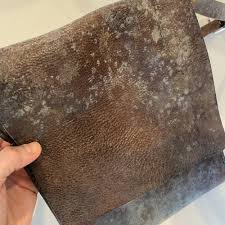
What does a black mold spore on leather look like? Understanding this is critical for homeowners trying to protect valuable leather items such as jackets, bags, furniture, and car interiors.
Leather is a natural, porous material that can easily trap moisture, creating the ideal environment for mold spores to settle and breed.
When people see white or dark patches form on these leather surfaces, they panic. However, it’s necessary to know that a huge portion of white fuzzy material on old or treated leather is fatty acid spew, not mold. Wrongly identifying the issue can result in unnecessary damage or ineffective cleaning methods.
Plus, if you doubt that there are black mold spores on your leather stuff, feel free to reach out to Teton Environmental. Their teams offer professional guidance through mold inspection and testing to determine whether the issue is mold or a harmless reaction of the material.
Key Takeaways
- Black mold on leather usually appears as dark blotches, spots, or speckled stains. These spread over time.
- Humidity, warmth, and poor ventilation allow the mold to thrive on leather.
- Don’t assume all discoloration is mold. Some white residue can also be fatty acid spew.
- You can permanently damage leather via improper cleaning methods.
- Go for professional testing, especially when mold covers large areas or causes health symptoms.
What Is Black Mold?
Black mold is a general term. It is used to describe dark-colored mold species that grow in damp environments. Scientifically, Stachybotrys chartarum is the most commonly referenced type. But numerous molds also appear black without being toxic.
People usually ask what does black mold smell like. The answer is a strong, musty, damp, and earthy odor. The reason is microbial volatile organic compounds, released during mold growth.

Plus, understanding the difference between mold types is equally important. This comparison is explained in black mold vs toxic mold. It helps clarify that not all black-colored mold has to be toxic. But all mold growth is and should be taken seriously.
What Does a Black Mold Spore on Leather Look Like?
A frequently asked question is: What does black mold spore on leather look like? The appearance largely depends on the stage of growth. The thing is, mold spores are microscopic in the earliest stages, making them invisible to the naked eye.
As it grows, more visible signs begin to form. It can be through surface changes, discoloration, and odor:
Typically, black mold spots on leather appear as:
Small Black or Dark Brown Dots
Dark brown or small black dots are scattered across the surface.
Do you think you have black mold on your leather? Use our at home test kit.
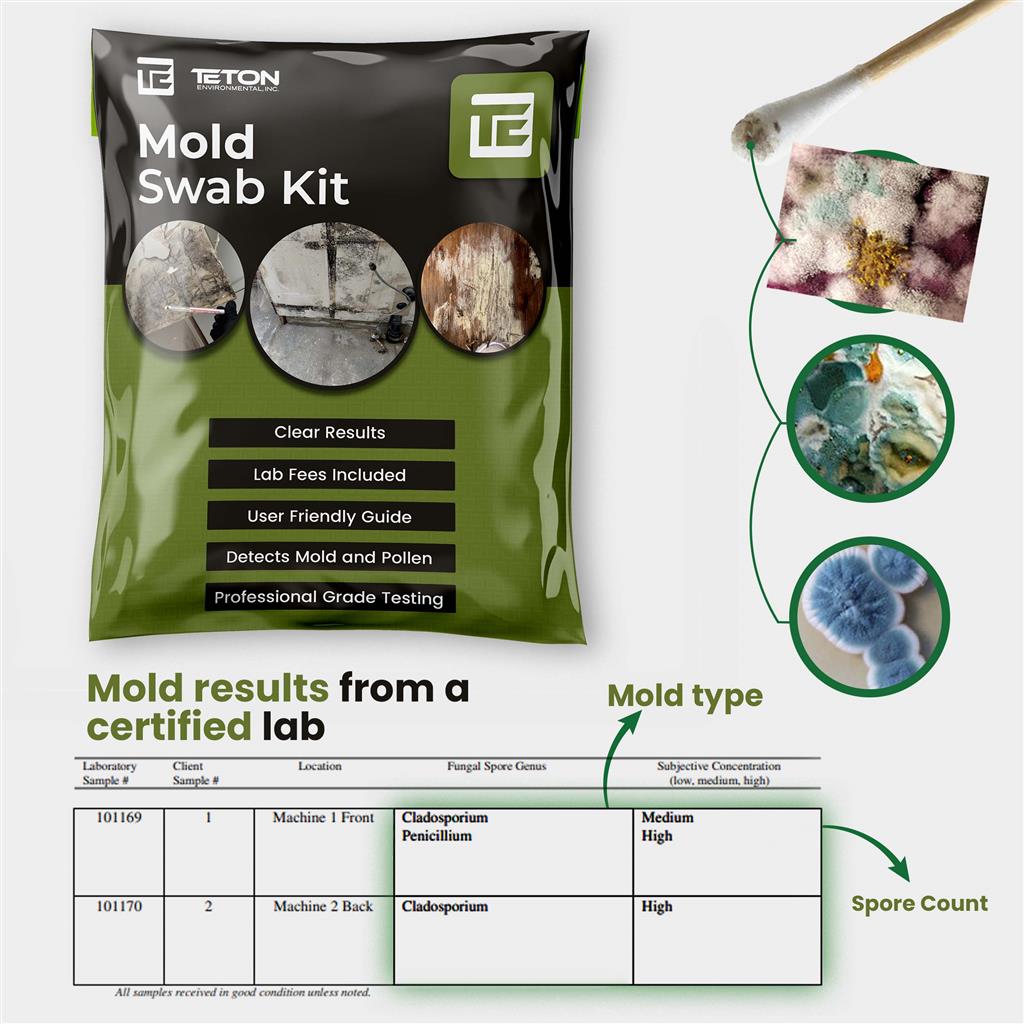
Mold Test Kit – Lab Fees Included, 1 Swab can Detect 20+ Mold Types & Pollen, Easy-to-Use Guide, Professional-Grade Testing
Irregular Blotches
There will be irregular blotches with a powdery or fuzzy texture.
Gradually Deepening Dark Stains
Dark stains that gradually deepen in color. And begin spreading outward.
Black mold on leather usually appears flatter than mold on walls. Instead of raised blotches, it may seem embedded deep into the leather grain, making the removal harder.
What Are The Early Signs of Mold Growth on Leather?
Musty or Earthy Odor
You will notice a slightly musty or earthy odor.
Tiny Specks Along Seams
The black mold might be in the form of specks. It will form along folds, creases, or seams.
A Sticky Texture
You may feel a sticky or tacky surface texture.
How Do Mold, Mildew, and Dust Differ?
Mold: The fungus has a fuzzy growth. It spreads unevenly, producing a musty smell.
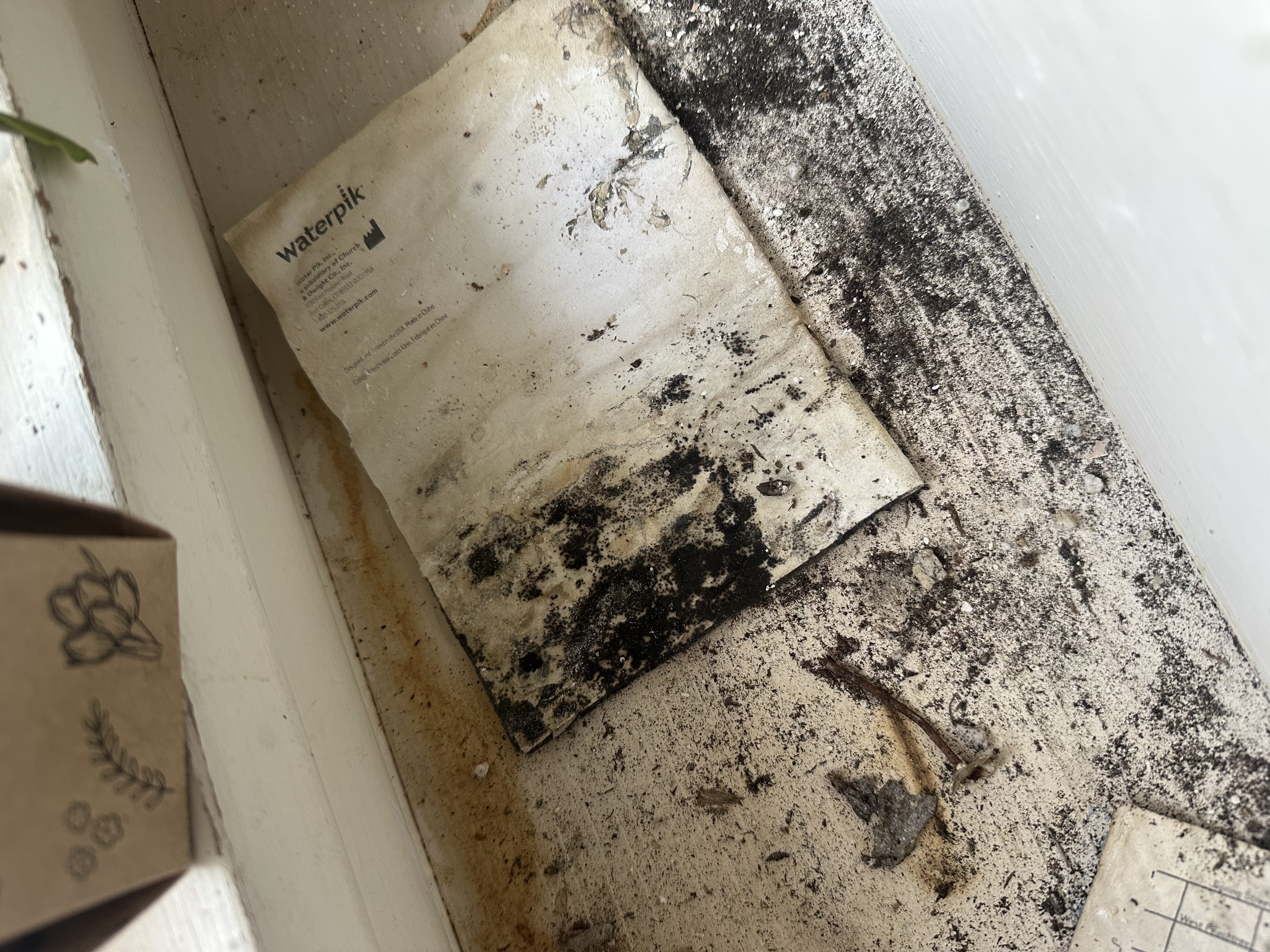
Mildew: Mildew has a powdery texture, is flatter. The color is usually white or gray.
Dust: Dust is a common sight. You can easily wipe these dry particles. Unlike mold, they don’t smell.
Common Colours of Mold Found on Leather (White, Green, Black, Blue)
White: The shade is usually confused with fatty acid spew.
Green: Hints toward active mold colonies.
Black: Black signals that moisture-related growth is advancing.
Blue: This one is less common. But don’t underestimate as it’s still harmful.
Why Mold Grows on Leather Items?
Leather is a natural, porous material. The porousness only makes it open to absorbing moisture. When that becomes trapped within the leather fibers, an ideal environment for the mold is created. This is why black mold on leather is commonly found in vehicles, homes, and storage areas having poor climate control:
High Indoor Humidity
High indoor humidity is one of the leading causes of mold on leather. When there are excess moisture levels, leather absorbs water from the air. Letting mold spores activate and multiply.
Dark, Enclosed Storage Spaces
Storing leather items in basements, closets, or storage boxes is not a good idea. Doing so often prevents airflow. These dark, enclosed environments trap moisture, motivating mold growth.
Uncleaned Spills and Residue
Oils, liquid spills, and or sweat are also in the list of causes. If left uncleaned or not done properly, the leather soaks them, feeding spores.
Poor Airflow
Proper ventilation is necessary for moisture evaporation. Without that, this issue will keep occurring. Car seats, jackets, and leather couches are vulnerable in humid climates, especially where airflow is limited.

Mold Risks & Symptoms
Mold growth on leather goes beyond a cosmetic issue. When left untreated, it poses health risks. Frequently coming in contact with contaminated leather, accessories, or furniture increases the probability of ongoing exposure.
Health Symptoms
Exposure to black mold spots on leather can spark various symptoms. In this situation, sensitive individuals are more vulnerable. Airborne mold spores commonly trigger reactions, including sneezing and coughing.
Furthermore, after direct contamination with mold-infected leather surfaces, skin irritation may also occur. Many individuals also report headaches because of prolonged exposure in enclosed areas.
Respiratory Concerns
Mold exposure is dangerous for people with respiratory conditions or asthma. It can worsen breathing issues, increasing the asthma attacks. Breathing in an airborne environment, mold spores irritate the lungs and airways. This leads to immense discomfort or chronic symptoms.
Risk of Continuous Exposure
Leather furniture, like couches and chairs, is used daily; therefore, mold exposure becomes constant. Continuous exposure worsens health symptoms, turning them into long-term issues. So, it’s highly recommended to promptly address the fungal growth.
How to Safely Clean Mold Off Leather? (Step-by-Step)
You must be cautious while cleaning mold from leather. In this way, materials will remain safe, and spores also won’t spread. Therefore, if you come across black mold on couch, cushions, or leather chairs, follow these steps:
Step 1: Protect Yourself
First, protect yourself. Always wear gloves and a face mask before stepping in. The safety gear keeps you away from direct contact with mold spores and reduces inhalation risk.
Step 2: Remove Loose Mold Spores
Don’t use any random vacuum. Take the one with a HEPA filter. It gently removes loose spores from your leather surfaces. The vacuum holds mold particles and prevents them from spreading further.
Step 3: Gently Clean the Surface
Grab a slightly damp microfiber cloth. Apply a leather-safe cleaner designed for delicate materials. And wipe the affected area.
Step 4: Dry Thoroughly
Keep the leather in a well-ventilated space and allow the leather to dry completely. Never soak the material. While you can apply strategies similar to how to clean black mold off wood, leather demands gentler handling to prevent damage.
Natural Cleaning Methods for Mold on Leather
Harsh chemicals on leather can cause permanent damage. This is why many people ask: does bleach kill black mold? The agent may kill surface mold, but it’s still not recommended to use it on leather.
Why Bleach Should Be Avoided?
Avoid bleach because the solutions strip off natural oils from leather. Plus, it causes cracking over time and permanently discolors the surface. Leaving the material brittle and dry.
Safer Natural Alternatives
When used correctly, natural cleaning methods are safer for leather. Try diluted white vinegar for neutralizing mold. Rub alcohol with proper spot testing. And baking soda for absorbing the lingering stench without damaging your particular leather item.
When You Should NOT Clean Mold Yourself?
No need to DIY cleaning when:
- Mold patches cover large areas
- After cleaning, the leather smells strongly off.
- Health issues are there
- Mold keeps returning
In such cases, professional black mold removal is more effective and safer.
How to Prevent Mold on Leather?
Preventing mold is part of long-term black mold remediation. Do the following:
- The humidity should be kept below 50%
- Invest in dehumidifiers and place them in specific spaces.
- Store leather in properly ventilated areas.
- Regularly condition and clean the leather
These practices decrease the requirement for scheduling costly remediation services in the future.
Professional Mold Testing & Removal Services
Unsure whether the issue is fatty acid spew or mold? Consider professional testing important. Black mold removal professionals identify mold species. Examines health risks and safely removes contamination.
Contact Teton Environmental for expert evaluation. Visit their Mold removal company service page link to learn more about comprehensive solutions.
FAQs
Can mold permanently damage leather?
If left untreated, mold can weaken fibers, stain surfaces, and cause cracking.
Does vinegar kill mold on leather?
Vinegar can help with light mold. But it must be diluted and spot-tested to avoid damage.
Can I use bleach on leather?
Bleach damages leather and does not penetrate mold roots effectively.
Why does my leather smell musty even after cleaning?
Lingering odor may suggest spores embedded deep within the leather, requiring professional treatment.