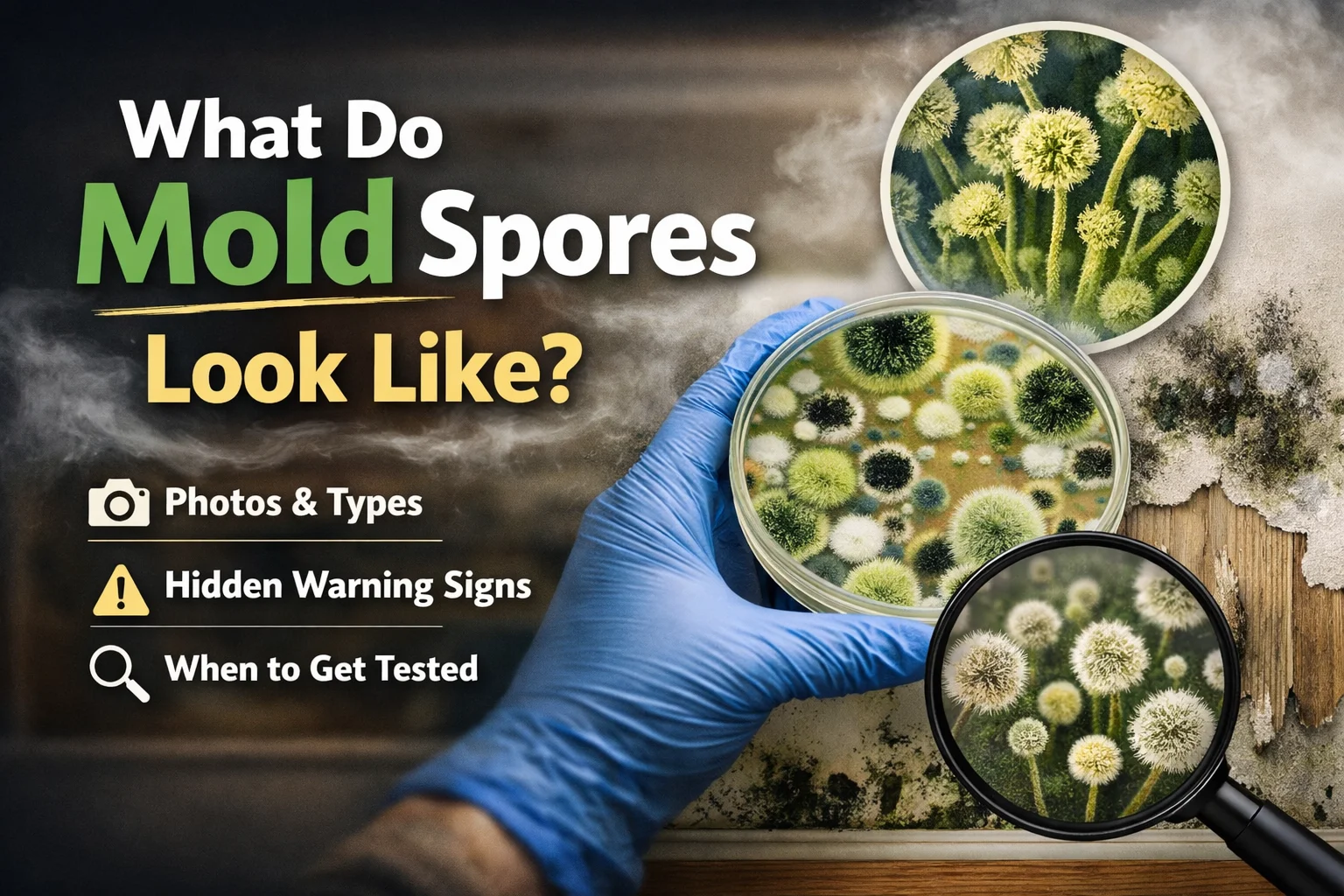
Hearing the word mold upsets many homeowners. Few truly understand what do mold spores look like. Or what makes them such a concern? These are microscopic particles that travel through the air and quietly settle inside your home.
Within the first few days of moisture exposure, the spores can grow into visible mold colonies. In different environments, knowing what the spores look like helps you recognize early warning signs and take action before serious damage or health issues occur.
Do you suspect a hidden issue? Seek professional mold inspection and testing services. These identify problems early, protecting your health and property from long-term mold exposure. The fungal growth is more common than many people realize, especially in poorly ventilated or damp areas.
What do they look like? This blog will explain their appearance, behavior, and the important signs you should never overlook.

Key Takeaways
- Understanding mold spores motivates you to act responsibly and quickly.
- Spores are usually invisible, but their presence leads to visible mold growth, health symptoms, or odors.
- Use an air purifier for mold spores. It helps reduce airborne contamination, not replace professional inspection or remediation.
- Work with Teton Environmental. They are experts who ensure accurate testing, reliable results, and safe solutions personalized to your home.
- Early detection and prevention are always less expensive. Otherwise, homeowners have to deal with widespread mold damage later.
What Are Mold Spores?
Mold spores are tiny reproductive cells. Mold colonies release them to spread and survive. Can you see mold spores? The answer is often no. Individual spores are too small for the untrained eye. It requires magnification to observe clearly.
If you are wondering about the mold spore size, the fungus ranges from 2 to 10 microns. This makes them far smaller than dust particles. Due to its small size, spores float in the air for long periods and travel through HVAC systems, clothing, and even windows.
During colder months, condensation builds up indoors, leaving your home more vulnerable. Problems such as poor insulation and humidity explain what causes mold in a house during winter, resulting in faster spore growth without proper ventilation.
Common Mold Types
Indoors, many types of mold are found. These are:
- Aspergillus
- Cladosporium
- Penicillium
Each releases spores with slightly differing characteristics. Still, they thrive in moist environments and can impact indoor air quality.
What Do Mold Spores Look Like to the Naked Eye?
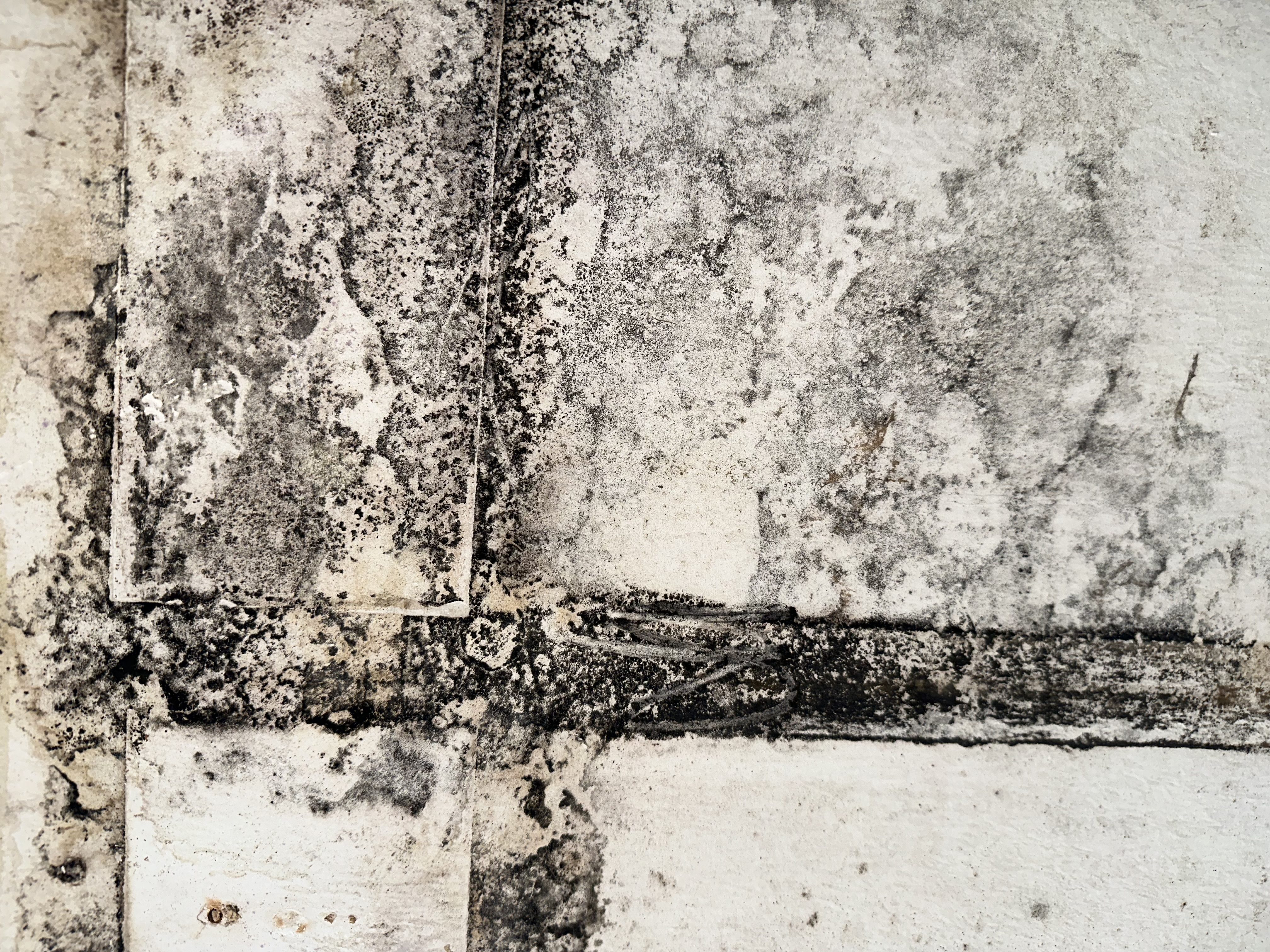
Many homeowners don’t know what does a mold spore look like. Individual spores are too small to be seen without specialized equipment. To the naked eye, spores are invisible. People usually observe visible mold growth, which forms when numerous spores settle on a damp surface and begin to multiply. At first glance, the colonies are mistaken for stains or dirt.
When assessed in controlled settings, mold spores under a microscope appear as tiny oval, round, or elongated particles.

Some mold spores have textured, rough, or spiked surfaces that help them cling to walls and fabrics while growing in unfavorable conditions.
Different Mold Colors, Textures, and Their Meaning
- Visible mold appears green, black, white, gray, or maybe orange as well.
- Powdery, fuzzy, or slimy textures usually indicate active mold growth.
- Color doesn’t determine toxicity, but any visible mold signals that spores are present and spread indoors.
Signs of Mold Spores
Recognizing signs of mold spores in the home helps prevent expensive repairs and possible health issues. Mold spores circulate unnoticed, but your residence may show the following light warning before the visible one appears:
Musty or Earthy Odors: A constant musty or damp smell is one of the earliest symptoms of airborne mold spores. The unpleasant odor would be in bathrooms, basements, or poorly ventilated areas.
Allergy-Like Health Symptoms: Unexplained coughing, watery eyes, coughing, and skin irritation signal exposure to indoor mold spores.
Visible Mold Growth: Spotted mold growth on ceilings, walls, furniture, and around windows? This suggests that active mold colonies are releasing spores into the air.
Excessive Condensation and Moisture: High indoor humidity levels, damp surfaces, or foggy windows create perfect conditions for mold spores to survive.
Failed DIY Mold Tests: A petri dish mold test indicates hidden mold growth. It’s releasing spores beyond visible areas.
What to Do If You Suspect Mold in Your Home?
Suspecting mold? Don’t disturb affected areas. They have a small mold spore size that spreads quickly when surfaces are cleaned improperly or touched. Therefore, do the following:
Professional Mold Inspection and Testing
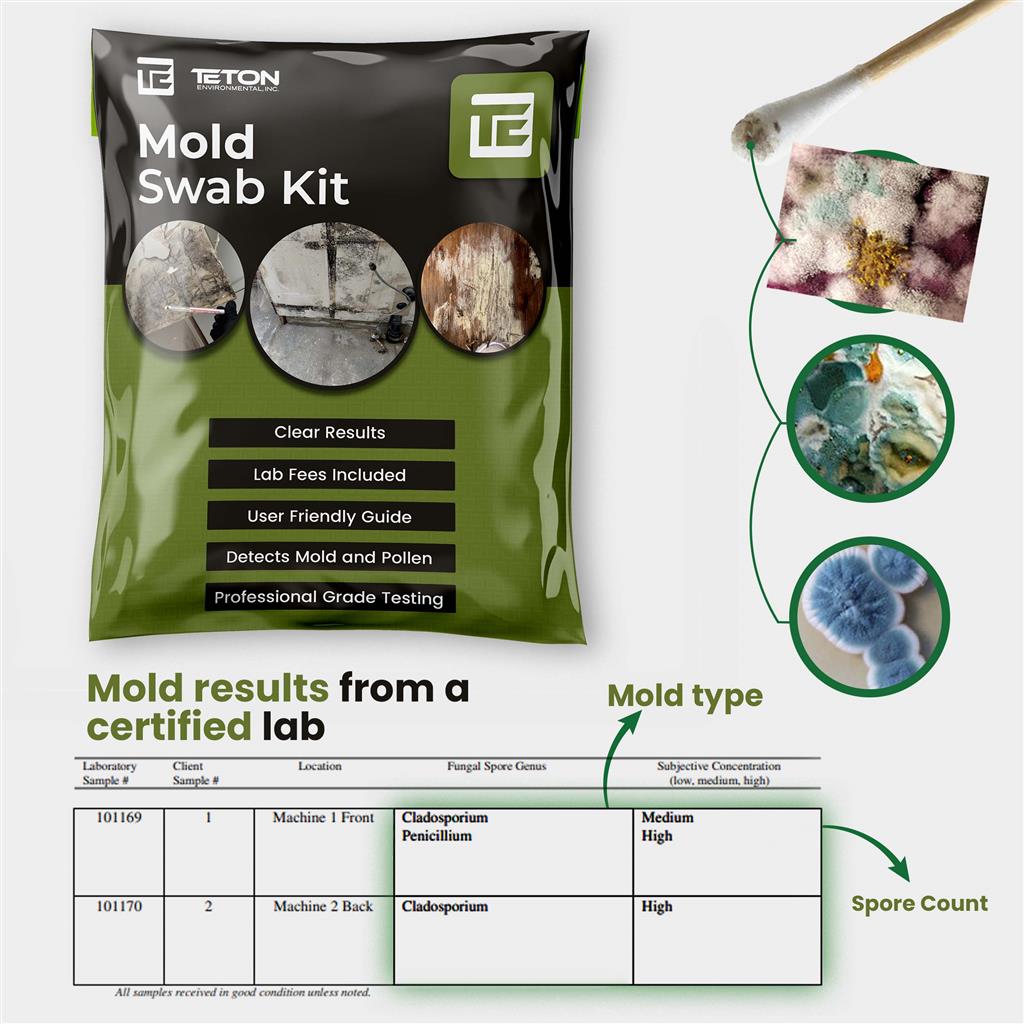
Hire professionals for testing. It’s the safest approach. Certified inspectors use surface and air sampling to determine contamination levels.
Contact Teton Environmental for reliable results. Schedule a thorough evaluation to protect your indoor home environment.
Expert Mold Remediation Services
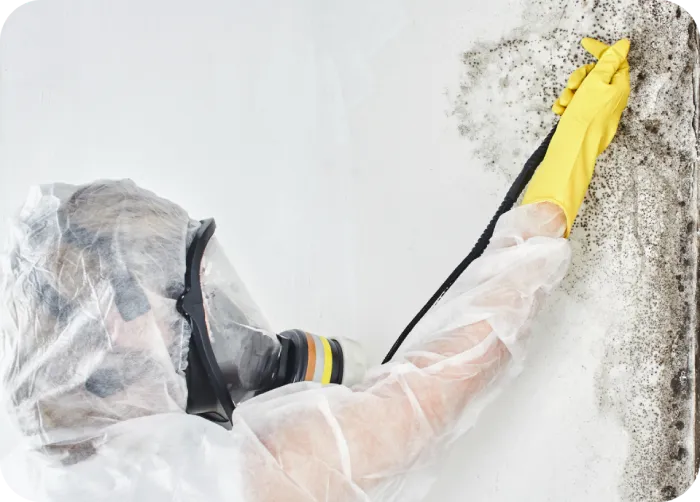
Mold confirmation makes professional remediation essential. Get in touch with a remediation company. They will contain the area and remove the contaminated materials, and prevent spores from further spreading.
Some Effective Mold Prevention Tips
Controlling moisture and cleaning indoor air are the first steps to prevent mold. Use an air purifier for mold spores for trapping airborne particles. It improves air quality and reduces exposure.
Furthermore, you can also try the following prevention tips:
Fix Leaks: Promptly fix leaks
Improve Ventilation: Improve ventilation in kitchens and bathrooms
Use Dehumidifiers: Use dehumidifiers in damp areas
Follow Guidance: Follow guidance on how to prevent mold on windows in winter
Maintain Consistently: Be consistent with maintenance
Monitor Regularly: Regularly monitor to reduce the risk of mold returning.
FAQs
How big are mold spores?
People ask how big are mold spores. The size affects how easily they spread. Typically, spores measure just a few microns, meaning how big is a mold spore is smaller than what your eye can detect. Their tiny size permits them to remain airborne for long periods.
How long do mold spores live?
Homeowners usually wonder how long do mold spores live indoors. Under the right conditions, mold spores can extend for months or even years. This answers how long can mold spores live.
Does bleach kill mold spores?
Many frequently ask does bleach kill mold spores. Bleach removes surface stains, but does not completely eliminate spores, especially on porous materials. Professional treatment is recommended for long-term mold control.