When you notice strange odors or see black spots in your washing machine, it’s usually an indication of mold in your washing machine parts demanding your attention. Delaying treating the marks on time, allows it to quickly spread, changing your washing machine into a black mold laundry machine and leaving stains on washed clothes. On top of that, if not checked, the same black mold on clothes can trigger health issues in you and your family.

Teton Environmental notes that people with weakened immune systems can develop invasive mold infections (IMIs) from breathing in mold spores. It means that not only your laundry is in danger, but your health as well, making it critical to take prompt action. This blog will cover important details: why mold grows in your machine, signs that it has already taken over, five cleaning steps, ways to prevent it in the future, and when you should call a professional to help you.
What Causes Mold Growth?
How does black mold form in the first place? Mold is a fungus that breeds in moist, warm, and dark environments, and the exact sort of conditions are found in so many washing machines.
Here are a few common causes of mold growth in your laundry appliance:
- When the fabric and detergent softener residues start collecting in the gasket and drum.
- Once done washing, closing the doors traps humidity inside the machine.
- Frequent usage of cold water cycles that don’t kill mold spores.
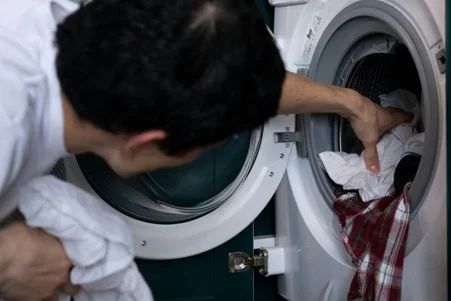
- When wet mold on clothing is left inside the machine for hours after the cycle finishes.
When you merge extra moisture with constantly lingering dirt and detergent, you are allowing mold to settle, grow, and spread.
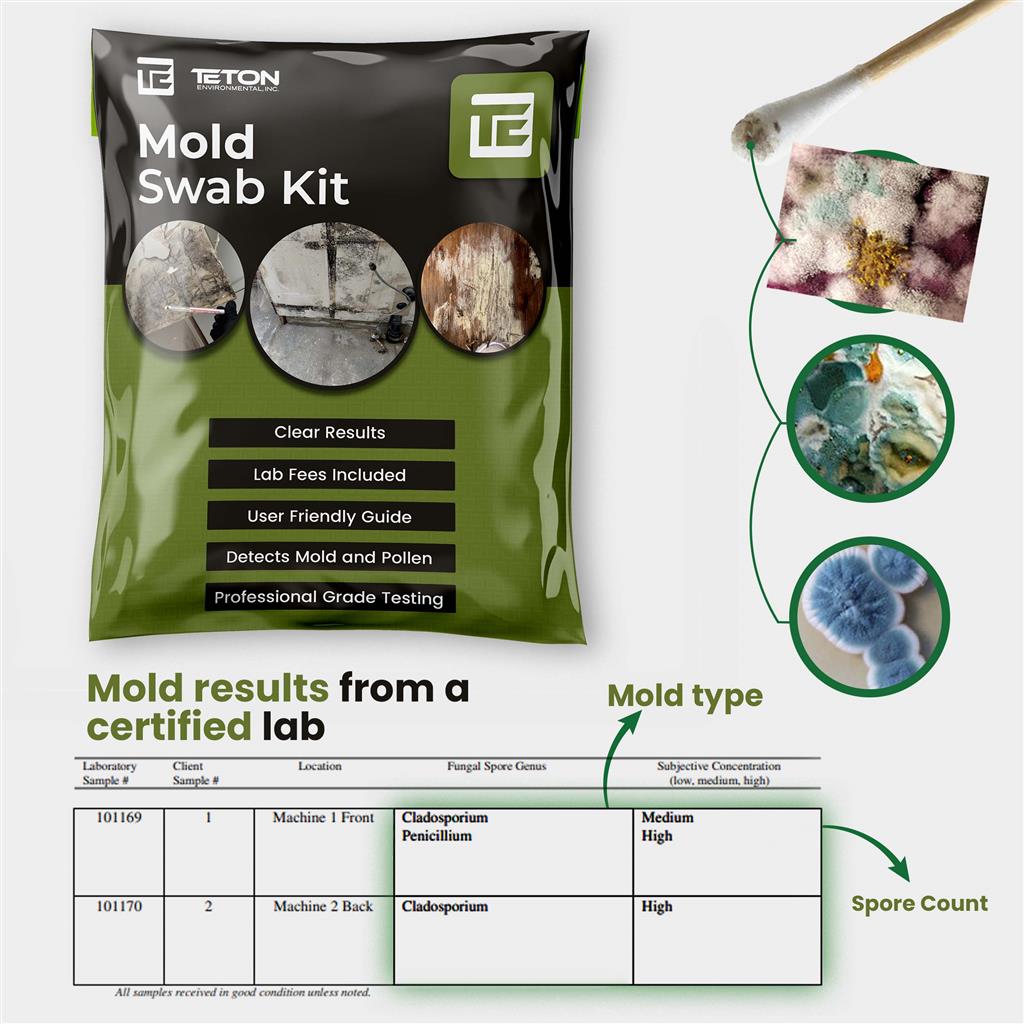
Test for mold in your washing machine using our DIY kits!
If you want to know a detailed comparison of different types of strains and the health risks associated with them, feel free to explore black mold vs toxic mold.
Signs of Mold in a Washing Machine
Identifying and catching hold of mold early can save you from massive cleaning troubles later on. Here are some signs to look for if your laundry machine smells like mold or if you are stressed about hidden spores that might be dirtying your machine and clothes:
Musty or Sour Smells
A musty, earthy sour stench is one of the first signs. If your washing machine or laundry spot has a similar odor, even when there is nothing inside, it could be the mold.
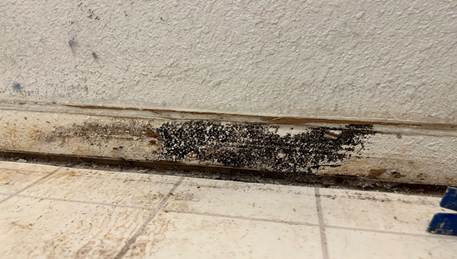
Black Spots on Gasket, Drum, or Dispenser
Are there visible dark patches around your rubber door gasket? Inside the detergent drawer? Or even in the drum? It could appear as mold spots on clothes and machinery, which will keep accumulating if not regularly cleaned.
Clothes Coming Out With Residue
Even after thorough washing, if your laundry smells foul or you notice mold stains on clothes, that’s another clear sign that spores are active in the washer. Your clothes texture may also feel slimy or carry a slight discoloration.
For more signs and professional assessment suggestions, check out how to inspect for mold in your home.
Step-by-Step: How to Clean Mold From Laundry Machine?
Have you confirmed that those are mold spots? Don’t panic, here’s a step-by-step guide on how to clean mold from laundry machine interiors and get your machine and clothes spotless. Make the most out of these five steps:
1. Clean the Gasket
- First, you need to clean the gasket. Pull back the rubber gasket around the door.
- Then, grab a cloth, soak it in white vinegar, and if that is not available, go for diluted bleach.
- Do proper scrubbing with soaked cloth to remove visible mold and buildup.
2. Clean the Dispensers
- Now clean the dispensers. Here, detach the detergent and fabric softener trays.
- Soak both of them in hot and soapy water, and again scrub.
- Use an old toothbrush to remove the leftover residue.
3. Run a Hot Cleaning Cycle
- Try running a hot cleaning cycle without clothes. Use two cups of vinegar or a washer cleaner tablet for running a hot cleaning cycle.
- Is the mold at your end too severe? Repeat using diluted bleach.
- The bleach and vinegar play a pivotal role in killing the spores inside the hoses and drums.
4. Wipe the Drum and Door
- Once you are done with the cleaning cycle, make sure to wipe all surfaces with a clean towel.
- Pay more attention to cleaning the corners and crevices where mold can stay.
5. Air Dry the Machine
- The last step is to air-dry the machine. Do this by leaving the door and detergent drawer open for several hours, instead of closing them immediately.
- Keeping it open discourages humidity buildup and decreases mold regrowth.
- Repeat the procedure on a monthly basis for the best results.
Preventing Mold
After the cleaning is done, the next stage is prevention. This doesn’t require expensive or specialized equipment as you can keep mold in laundry machine areas at bay with the following techniques:
- Remove Wet Laundry: Never forget to remove wet laundry. Mold on clothing in your washing machine motivates the spores to transfer.
- Wipe The Drum: Use a soft cloth to wipe down the drum and gasket after every wash.
- Use High-Efficiency Detergents: Fill your laundry area with high-efficiency detergents, but avoid overloading.
- Don’t Close The Dispenser Drawer: Avoid closing the washing machine’s door and dispenser drawer. Let air cross to prevent moisture build-up.
- Run Hot Cleaning Cycles: Run hot cleaning cycles without clothes every month to remove spores.
- Give Extra Minutes: Give a few extra minutes after every load. This can save time from scrubbing for hours later on.

Why Natural or DIY Products May Not Be Enough?
People stick to traditional home remedies and DIY strategies like vinegar and baking soda. They are fine for light cleaning, but when dealing with black mold on clothes or inside your washing machine, none of these can remove the spores.
What Is Black Mold?
Black mold produces mycotoxins. These are much harder to kill and may deeply settle in fabrics or corners of the machines, where your hand or these cleaning methods won’t reach. The natural products can just handle basic issues, and not recurring mold, as that requires to proceed with stronger treatments or professional-grade solutions. Therefore, be it natural or DIY techniques, both will fail in front of removing mold.
When to Call a Professional?
If your laundry machine smells like mold even after cleaning it regularly, yes, the infestation may be deeper than your bare hands or methods can reach. The fungus can spread into your hoses, internal compartments, or even into the cleaning area’s walls and flooring near the washing area.
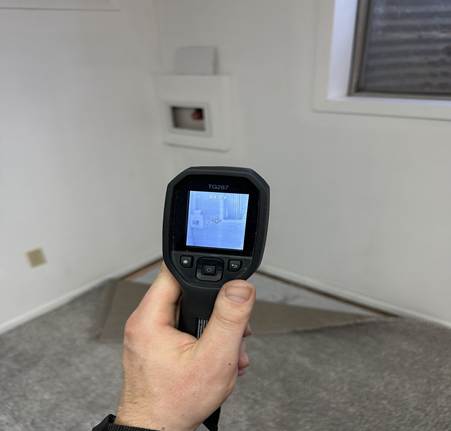
At this point, everything nudges you to call a professional. They can visit your laundry room and conduct thorough testing and remediation. You can explore mold inspection and testing services to get a better idea of the whole situation. And see how their teams give you a spick and span washing zone.
Protect Your Home & Test For Mold Today
Don’t allow mold to breed inside your washing machine and remain an invisible problem. Despite your thorough cleaning, mold’s spores can still circulate inside the home, therefore get in touch with professionals.
For expert help, contact Teton Environmental today. Their professional team provides detailed Environmental Testing Services to assist you in identifying and removing the mold before your family starts getting ill.
FAQs
How do I clean the mold in my washing machine?
You need to follow the five steps: clean the gasket, scrub the dispensers, run a hot cleaning cycle, wipe the drum, and air dry your washing machine.
Is mold in a washing machine harmful?
Yes, it is harmful as it can transfer to your clothes, causing mold stains on clothes, and releasing spores into the air. This can become quite risky for people, especially with allergies, breathing issues, or a weakened immune system.
How do you remove black mold from rubber?
Mix diluted bleach or white vinegar with water, soak a cloth, and begin scrubbing the rubber gasket. In case of persistent stains, the process needs to be repeated, and the solution needs to sit for ten to fifteen minutes for easier wiping.